How can a short film be successful? - Case Study: Panic Attack!

I have decided to look into what makes a short film successful outside of the money and profit being made. I have decided to look specifically into 'Panic Attack!' a film by Federico Alvarez.

Image result for panic attack short film

Panic Attack! was released in 2009 by Alvarez, an advertising director, who posted the film online. Alvarez directed and edited the film himself, costing him $300 for the hire of extras who were in the film. The CGI and sound effects were added in post-production by Alvarez. The film was published online and gained popularity via Word of Mouth.

Image result for panic attack short film

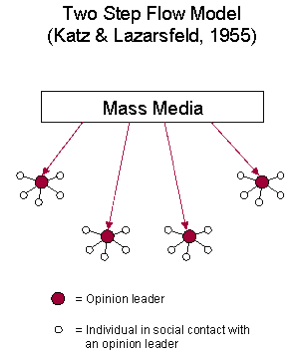
Panic Attack! is an example how films distributed online can be measured by success on the amount of views the video gets. Alvarez used the 'two step flow' theory - by releasing his film online and getting it retweeted by Kanye West who acted as an opinion leader, promoting the film to his followers on twitter. The 'two step flow' theory can only be applied to films distributed online as they are much easier to share on platforms such as social media.


Within days of releasing his film, Alvarez was receiving calls from Hollywood and then he was in LA with a new agent. Two weeks following this, Alvarez was offered a contract with Mandate Pictures and Spiderman Director, Sam Raimi, to create a $30 million feature film based around an Alien invasion in Buenos Aires.

Image result for Federico Alvarez director

From this case study, I have learnt that distributing a film online - on a site such as YouTube - would not decrease the potential success of my short film. In fact, I have been reassured by looking into Alvarez's method of distribution and the success of his film that I could also achieve my films potential through distributing it online, and using a promotional package in addition to social media.

Narrative Structure: Propp

 Vladimir Propp's Narrative Theory

Propp was very intrested in the telling of folktales and fairytales. He noticed numerous similiarities in a variety of these story types, from these similarities, he developed a theory on the characters and actions as narrative functions. According to Propp, each character has a narrative function and they each provide a structure for the text.


The typical characters he found were:


The Hero - a character that seeks something.


The Villan - who opposes or actively blocks the Hero's quest.


The Donor - who provides an object with magical properties.


The Dispatcher - who sends the Hero on his/her quest.


The False Hero - who distrupts the Hero's success by making false claims.


The Helper - who aids the Hero.


The Princess - acts as a reward for the Hero and as an object for the Villan's plans.


The King (The Princess' Father) - who acts to reward the Hero for their effort.


Image result for propps theory of narrative

How will I use this theory in my short film?

I will be including three of Propp's character/narrative functions in my short film:

Jess - The Hero(/Victim)

Jess' Mum - The Dispatcher

Dr. Ford - The Donor

Narrative Structure: Todorov's Theory of Equilibrium

Todorov's Theory of Equilibrium

Equilibrium in media means for things to be balanced; the absense of tensions in need for resolution. From this, Todorov simplified the idea of a narrative structure in his theory, whilst also allowing a much more complex interpretation. He split this theory into 5 stages:

1- A state of Equilibrium: when everything is as it should be. A state of normality and equal balance between the protagonists.

2- Distruption of the Equilibrium: a distruption to the normality and order cause by an event or an outside force that has to be fought.

3- Dis-Equilibrium: a recognition that the distruption has occured.

4- An attempt to restore the Equilibrium: an attempt to repair the distruption and go back to how things were.

5- The New Equilibrium is established: a reinstatement of the Equilibrium. The outer force is defeated and a new state of well being is acquired.

In this structure, the narrative is driven by attempts to restore the Equilibrium. The distrubtion the the Equilibrium usually takes place outside of the normal social framework and events. However, the Equilibrium that is established at the end of the narrative is not idential to the initial Equilibrium, as Todorov's theory argues that the narrative must include a transformation. This can either be in the form of the characters or situation being transformed by the events in the narrative.

This Narrative Theory is very familiar in films and is applied to many mainstream narratives.

Image result for todorov theory of equilibrium

How will I apply this theory to my own work?


Short Film: Filming and Editing Day One

Over the weekend I started to film scene one of my short film. In this scene Jess is shown to be waking up, scrolling though twitter and then going through her routine of body checking. The scene took a while to film and get right with the different camera angles and the limited amount of space we had in 'Jess's' bedroom.


After I filmed the first sequence, I uploaded the footage onto my google drive from my camera, before starting to edit it in WeVideo.


I decided to use WeVideo to edit my film as it is a software I have experience with and therefore I find it easily to edit the clips together and add the music whilst editing the sound within the footage itself. I had to move some of the music from my animatic around as the shots I took were longer than I had anticipated.

I plan on filming the rest of this scene, and hopefully scene three, tonight and spending the rest of the week editing the footage.


Here is my production schedule - as before, everything I have finished is highlighted in yellow; anything I am currently working on is in orange - I plan to complete as much of my filming before Half Term as I can so I can focus on editing and getting feedback from those within my target audience on my first edit.

Logo Design: Digital Format

I took photo's of my logo design sketches and uploaded my favourite into Adobe Illustrator. I decided to use Illustrator as it creates artworks using vectors and not pixels, allowing you to change the size of the piece freely without worrying about the appearance of the pixels. Using Illustrator, I digitally traced my design using the shapes tools. I then added the colours I wanted to the logo. I decided to keep the logo monochrome as I thought it looked more effective and profession than if I included brighter colours or tones. I decided to use a circular logo as I quite liked how it would appear on screen and in any promotional pieces I create for the short film.


I then found the font I wanted to use for my piece on fontspace.com. I originally wanted to use a font called 'Hill House', but I decided it was too risky as it is very similar to the font used for 'American Horror Story'. 


I decided to name my production company 'Silver Film Productions' as my surname, Argent, means Silver. I wanted to include the world 'film' in my company name as I wanted it to be obvious what I was doing.


I used Adobe Photoshop to add my font to my Logo, using the magic wand tool to remove the slightly darker background of the font so that it fit my colour scheme. I adjusted the size of the font until I was happy with the positioning.

This is my final Logo:


Casting my Short Film

Here are the actors I have selected to play the characters in my short film.

Jess - Lois Snellin


I made the decision to cast Lois in the role of Jess as she is very serious and enthusiastic about the plot and theme of the film. Lois was eager to get involved and showed an extended range of acting skills. She is able to stay in role and communicate emotions through facial expressions.

Doctor Ford - Richard Spencer


Rich was also very enthusiastic about the theme and the message behind the film, and was eager to get involved with the project. He was able to recite lines and quotes very seriously and was also able to stay in role for a long period of time.

Mum - Caroline Argent


Caroline was able to recite longer quotes from memory. She was able to convey her characters emotions and was also very good at staying in role even in difficult circumstances. Caroline also had an eagerness to be involved in the project.

Logo Design: Sketches

Here are some sketches and ideas I came up with for my institution logo. Using these images, I will digitally draw out my favourite two ideas and then choose between them following this. 


'In Control'